
The story that is commonly referred to as the woman with the hemorrhages or the woman who touched Jesus’s garment is recorded in Matthew 9, Mark 5, and Luke 8. (Do you see her fingers reaching out for the tassels through the crowds in the image).
The woman is said to have consulted physicians (Mark 5:26) for twelve years! (Matthew 9, Mark 5:25). According to Leviticus 15:19-30 in the Bible, “a woman is considered ceremonially unclean during her regular menstrual period for seven days. Anything she sits or lies on becomes unclean, and anyone who touches her or her bedding must wash their clothes, bathe, and remain unclean until evening.” The same is for menstrual cycles or bodily discharge for more than seven days (Lev 15:25). That means this woman was considered unclean for at least twelve years.
Not only is she unclean, but anything she touches or anyone or anything that touches her is unclean. Perhaps for 12 years, she has not had contact with any other person for fear of making them unclean (you can read more about the purification process in Leviticus 12-19 and some interpretation of it in https://www.thetorah.com/article/biblical-purification-was-it-immersion) . That also means people weren’t flocking to see her because of the rituals they would have to go through before regrouping with the masses. It also makes me wonder who her friends were? Who visited?
Twelve years is a long time. She has used her resources, and she is still suffering. Her suffering is social, emotional, spiritual, and physical. Socially, because it was the law that was holding her away from people. And I wonder what she thought about “community” and “belonging.” Emotionally, she must have been exhausted and lonely trying to deal with this by herself. However, if she had resources to survive twelve years by herself, I wonder if she was wealthy; if so, she must have had slaves. If not, did she just stay isolated and hear conversations of passersby to stay in touch with what was going on in the news? Physically, the illness must have been draining. Anyone who goes through the menstrual cycle will agree that having a discharge for twelve years is not pleasant. I wonder what this illness did to her hormones and her mental state. And spiritually, I wonder how she processed the law and the way it was being followed. I wonder how she placed the law alongside the Lawgiver, or did she see a disconnect between Jesus, the one through whom we see the Father (John 14:9), the Lawgiver, and the way the law was interpreted and followed?
But after this long wait, and I would imagine a whole lot of contemplation (I don’t know who she would have discussed it with, if she was secluded), she chose to defy the interpretation of the law that excluded her. She chose to seek out the one who included people socially, physically, and spiritually (in all observable ways). And when she stepped out, she may not have been recognizable as the one who had been unclean. But she stepped out, and many in the crowd whom she pushed through were rendered (in their own eyes and judgment) unclean. Yet, she defied self-seeking authority and the law that oppressed her and was imposed on her just to meet Jesus. But wait, she still didn’t have the courage to meet Jesus; she just touched the fringes of his garment (the tassel or tzitzit).
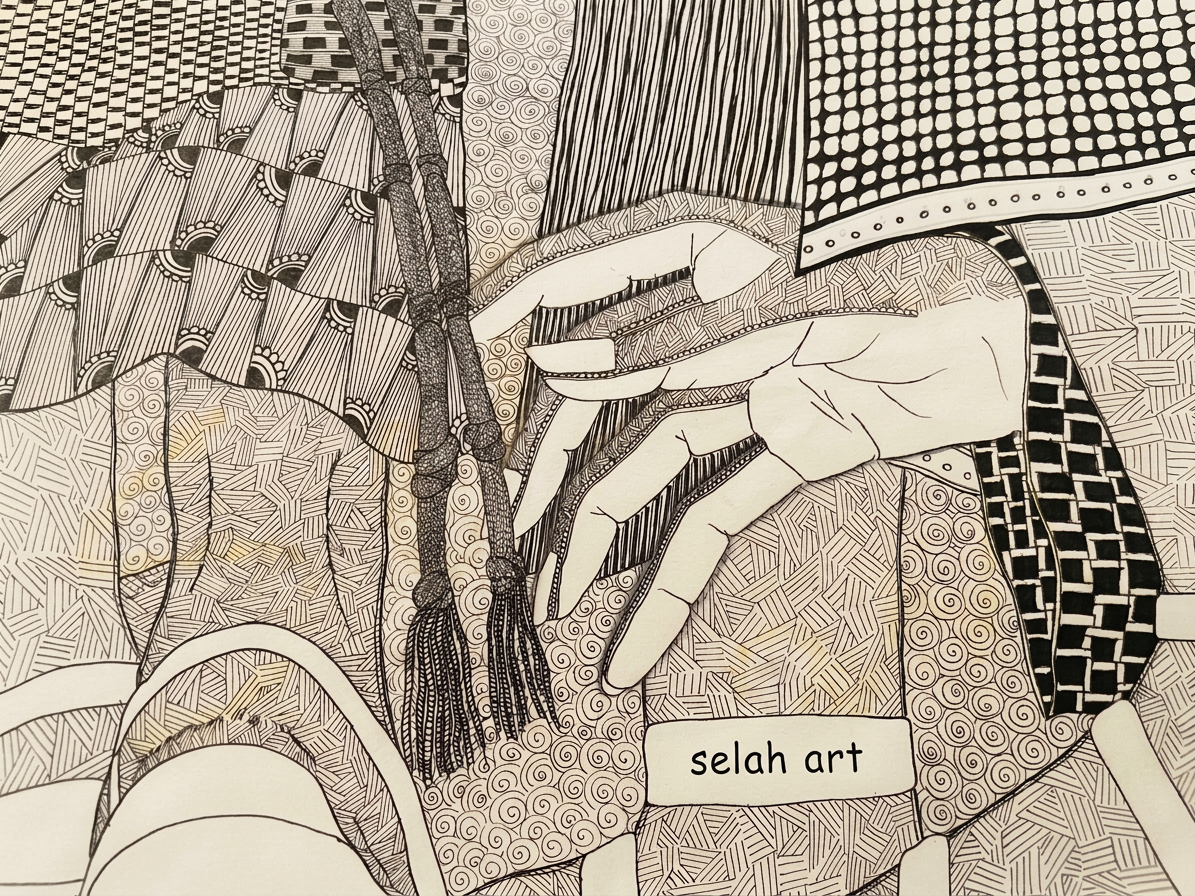
(In Numbers 15:38-39a, the Lord asks every jew to wear tassels as a reminder of the commandments of God. By the first century, we are told that rabbis and priests wore prayer shawls with tassels. Jesus, as a rabbi, probably had a prayer shawl with tassels on all four corners.) I wonder if her hermeneutical lens interpreted Malachi 4:2 and determined her course of action. But I wonder if she thought through what should happen next. Would she be punished for making all those people unclean? Who owned up to being unclean because of contact with her in the crowds? Would she be healed? Jesus’ acts of compassion in teaching and healing people reached her ears, raising her hopes of immediate salvation from the illness. And as always, Jesus gives more than we ask or can imagine.
According to the social and ritual customs of the day, if she was healed, a priest would have to declare her clean so she could rejoin the community. Perhaps she thought she would present herself to the priest and follow the procedures, and then be declared clean – if she was healed, and if not, her circumstances remained, and she would have to bear the consequences.
Through the crowds, her hands reached for Jesus’ garment, and “power went out” from Jesus to heal her. Jesus publicly recognized the bold step of defiance she took. “Who touched me?,” Jesus said. He didn’t say that because he didn’t know who touched him. He is God. But in making his bold query, Jesus declared He is a God who hears, who sees, and feels. He recognized someone with a deep need calling out to him. He wanted to draw attention to what had happened to a crowd that remained oblivious to the suffering one among them – He drew attention to how society had failed in being a community, how the community had isolated the suffering. At that moment, Jesus was, according to the written law that was adhered to, unclean. Jesus was declaring himself unclean in front of crowds who were pressing against him. Or not quite, in touching Jesus, the expected direction of ritual contamination is reversed. Rather than her impurity transferring to him, healing and wholeness flow from him to her. Jesus did not allow her to receive private healing while remaining publicly invisible. Instead, he restored her before the community. Jesus demonstrated the complete interpretation of the law; salvation was not reserved for “after one dies”. Jesus spoke and carried out salvation in that moment.
“Who touched me ?” – Jesus’ words allowed her to acknowledge what she had done as she would have in the purification process. Luke records in verse 47 of chapter 8 that she confessed she did. To which Jesus responds with words of belonging – “Daughter.” Jesus declared she belonged to him. Her defiance of the law brought her to Jesus, and he reinterprets the laws that excluded her socially, mentally, emotionally, and physically, calling her his own. Jesus reveals the law’s ultimate telos is restoration, holiness, and reintegration into covenant community.
Most definitely, God would have found a way to claim her as God’s precious one. But God healed not just for her sake but so the oppressors could hear Jesus call her his daughter, for their own sakes. So the oppressors or those who had learned to keep their distance could see that Jesus heals, so they could see Jesus uphold the law in word and spirit. So the oppressor could see how Jesus undid what they had imposed on this woman for twelve years.
Her bold defiance of the law because of the healing she desperately needed was met in Jesus’ faithfulness to fulfill the law, to set the captives free, to teach the oppressor their folly, and she was sent in peace.
Systems, interpretations, and social practices can unintentionally deepen suffering, even when rooted in sincere attempts at faithfulness. Where do we locate ourselves in this story? Are we among those longing desperately for healing and belonging? Or among those whose practices, assumptions, or interpretations unintentionally deepen another’s suffering?
May the light of God shine so that the oppression is exposed, and a path is lit for the oppressed to find peace. If we are the light, we ought to consider how we use our power. Claiming ignorance does not lead to just peace (this is a personal reference to ignorance -39:00 -39:12). The oppressor has to take responsibility, just as the oppressed would have to take the courage to step out and acknowledge presence. If we are the light of the world, we are to seek out peace even if it means defying oppressive behaviours and laws.
The tassel is a sign of authority and healing, typically worn by a rabbi. A little more on tassels: https://www.reenactingtheway.com/blog/why-jesus-heals-people-who-touch-his-clothes-youd-have-to-be-an-ancient-rabbi-to-figure-out-matthew-920-22